

HOP Home Equipment, Chosen for You
Measure once. Match your size. Start moving.
Jump to Ball Sizing
Jump to Slant Board & Feet
Jump to Weights
You don’t need to search through dozens of listings or guess between centimeters and inches.
Use the Rev6 measurement method to choose the right-sized ball for your body, then add the equipment recommended for practicing the Rev6 Essentials at home.
Start with the ball. Add equipment as your practice develops.
Start with the right ball
The ball is the foundation of Rev6 practice. Its size and inflation affect your starting position and how the drills feel.
A ball that is too large or too small can change the relationship between your hips, knees, and feet. That may make the drills feel awkward and pull your attention away from the movement.
The right-sized ball gives you the starting position you need to practice the Rev6 Essentials with control, consistency, and confidence.
Find your ball in 3 steps
This sizing method comes from Dr. Edythe Heus, creator and founder of Rev6.
Stand barefoot.
Measure from your belly button straight down to the floor with a soft tape measure.
Choose the ball that matches your measurement.
32 inches or less: 55 cm / 21.6-inch ball — [Get the 55 cm ball]
34–38 inches: 65 cm / 25.6-inch ball — [Get the 65 cm ball]
40–44 inches: 75 cm / 29.5-inch ball — [Get the 75 cm ball]
46 inches or more: 85 cm / 33.5-inch ball — [Get the 85 cm ball]
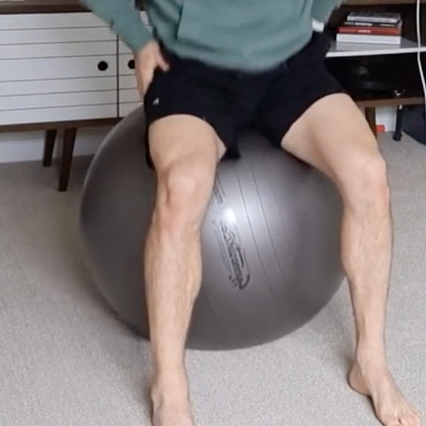
Between sizes?
Measure 33, 39, or 45 inches? You’re between sizes.
Either neighboring size may work. If you’re unsure, choose the available size and adjust the inflation appropriately for your body and the drill.
Allow the ball time to stretch after inflation, then check its tension and fit before using it.
What changes when your ball fits?
The right-sized ball helps you:
Start the drills from the intended position.
Position your hips, knees, and feet appropriately.
Spend less time adjusting your equipment.
Focus on the movement instead of fighting the ball.
Practice the Rev6 Essentials with greater consistency.
Finding the correct ball size is the first step in setting up your home practice. From there, you can adjust the ball’s inflation and learn how your body responds to each drill.
Add the equipment you need
You don’t need a complicated home gym.
Start with the ball, then add a slant board and light weights as your practice requires. Additional equipment gives you more options as you work through the Rev6 Essentials.
Slant board
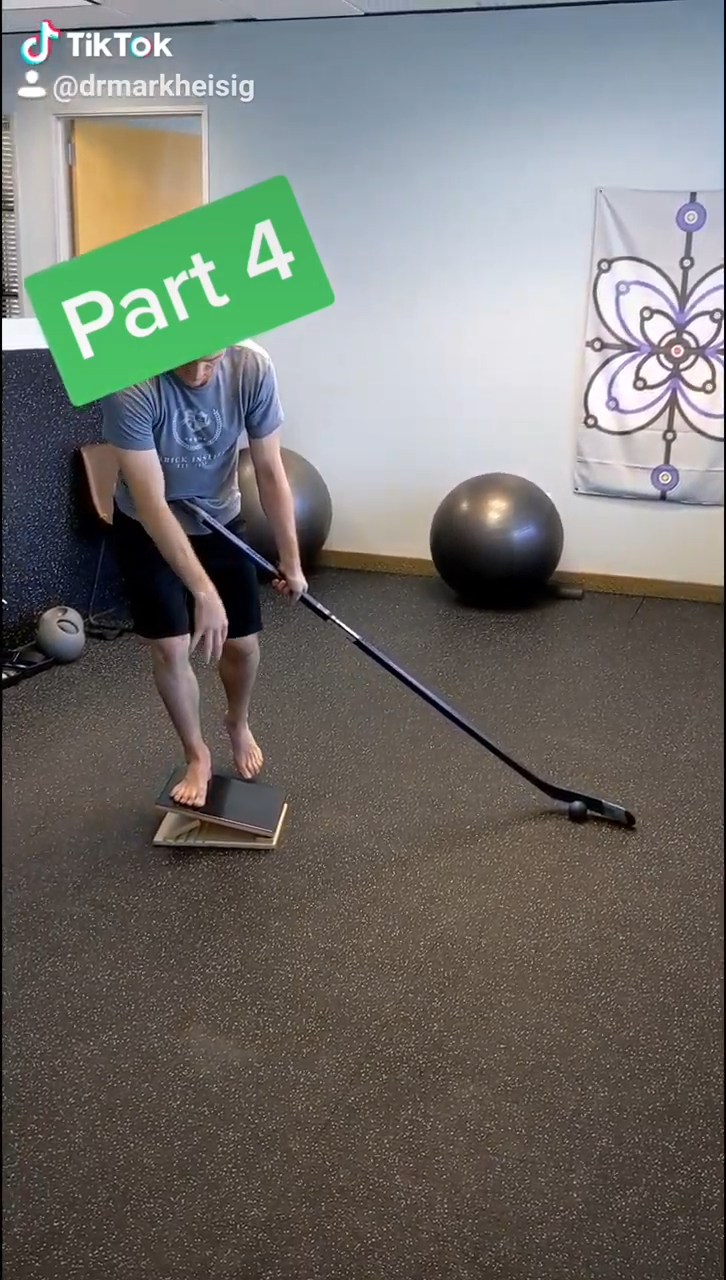
A slant board gives you a way to challenge your feet and ankles through different positions.
The standard board is sufficient for most people. An adjustable board is optional—not required—even for experienced athletes. Its main advantage is allowing you to increase the challenge in selected positions.
Choose your slant board
Adjustable wooden slant board
A durable option when you want to adjust the angle and increase the challenge.
[Get the adjustable wooden slant board]
Foam slant board
A lighter, more comfortable option that works well for most people.
[Get the foam slant board]
Small weights
A light set and a heavier set give you options as the drills change.
A practical starting range is:
Light set: 1–4 pounds
Heavier set: 4–8 pounds
Starting lighter is usually the better choice, even if you are strong and physically well-trained. You can increase the load when your movement is controlled and the equipment no longer distracts you.
For context, Mark has trained Rev6 for 11 years, played college hockey, practices Brazilian jiu-jitsu recreationally, and lifts regularly. His current sets are 2 pounds and 5 pounds.
Choose your weights
Water-filled bells
The shape used in Rev6 practice and the preferred option for many Rev6 exercises.
[Get the water-filled bells]
Pilates balls
A workable alternative used by Dr. Edythe Heus and Rev6 Master Trainers.
[Get the Pilates balls]
Your home setup is ready
You now have the basic equipment to practice the Rev6 Essentials at home:
A ball matched to your measurement
A slant board
Light and heavier weights
The equipment is only the starting point. The next step is learning how your body is moving and what may be limiting you.
Find what is limiting your movement
Book a movement assessment with Dr. Mark
Dr. Mark will assess your posture and gait—how you walk—so that together you can identify what may be limiting your movement.
You’ll then create a focused, individualized movement sequence to practice at home and apply to the activities that matter to you.
[Book Your Movement Assessment]
You don’t need to guess your way through the process.
Choose your equipment. Learn your movement. Move forward.
Disclosure: As an Amazon Associate, I earn from qualifying purchases.